Explore practical cases about schema impact, data meaning, application dependencies, ownership, and downstream decisions.
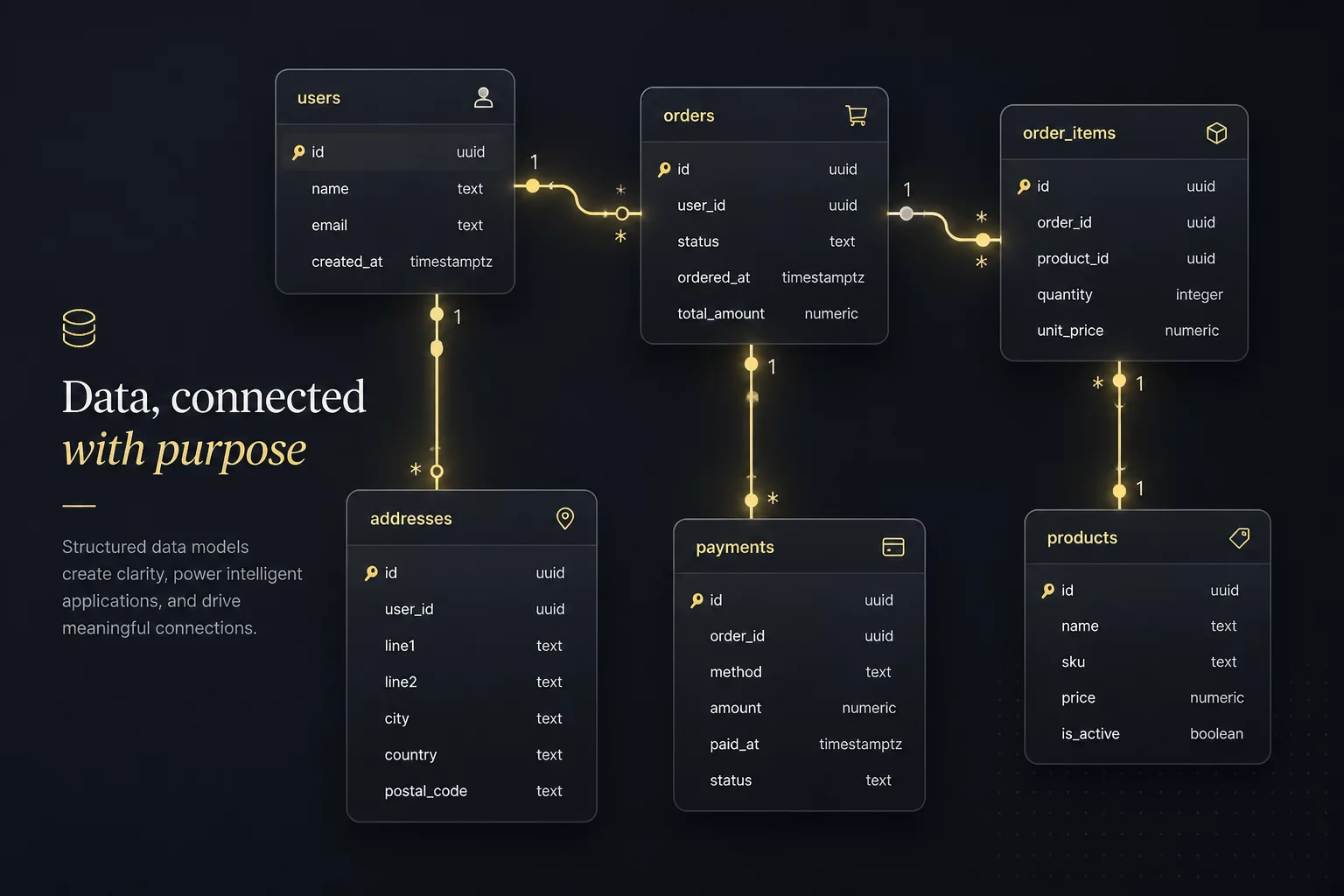
In modern distributed architectures, semantic drift is a silent killer. When a simple status column named "active" is shared across multiple domains, its definition slowly morphs to serve local business goals. What seems like a trivial schema or logic adjustment can silently break downstream operations.
The core engineering team considers "active" to mean the account is valid, not deleted, and technically available for login.

Read the comprehensive post-mortem of how a simple boolean flag rename cost a SaaS company 48 hours of billing drift and dozens of misfired notifications.
Deep-dive analysis of real-world database migrations, integrity failures, and downstream impacts.

A seemingly harmless schema addition introduced unexpected NULL values, silently breaking downstream financial aggregation queries.

How a technically correct foreign key constraint masked a fundamental logical error in user account hierarchy.

Renaming a legacy column without resolving its dual-purpose nature only propagated confusion to the new services.
An investigation into how three different departments defined an "active customer" differently in the database, leading to conflicting metrics.

Modifying a column length constraint triggered a cascade of failures in legacy batch scripts that assumed fixed-width inputs.

Uncovering hidden data drift where records older than five years followed an undocumented archival state flow.
Trusted by Database Engineers at

How we migrated a 2.1-billion-row table from auto-incrementing integers to UUIDs with zero downtime and improved query performance.

A critical migration executed on a high-throughput transactional database. We analyze the risks of primary key exhaustion and the architectural steps to mitigate them.
INT sign limit imminent (2.1B rows reached)
Due to index bloat and heavy lock contention
dreamThe primary transaction table was rapidly approaching the maximum limit of signed 32-bit integers. A failure to migrate would mean immediate write failures across the entire core system, halting payment ingestion.
To ensure precise technical alignment and avoid scope disputes, we clearly define what is included in our deep-dive database change analyses and what falls outside our coverage.
A side-by-side breakdown of our deep-dive analysis versus typical superficial database articles.
Multi-Layered Post-Mortems
We analyze AST parsing, lock escalation, buffer pool impact, and direct query execution plan regressions.
Superficial Syntax Guides
Basic explanations of standard SQL commands without discussing real-world scale or hardware constraints.
Full Pipeline Tracking
We trace how schema changes break reporting pipelines, trigger ORM anomalies, and cause replica lag spikes.
Isolated Code Snippets
Only focuses on the immediate query, ignoring application layers, API consumers, and BI systems.
Production-Tested Code
Includes safe migration scripts, explicit rollback strategies, and zero-downtime deployment patterns.
Theoretical Examples
Simplified scripts that cause table locks or fail completely when executed under concurrent production load.
Database Evolution & Integrity
100% focused on schema migrations, transactional semantics, and structural change safety.
General Software Engineering
Broad frontend/backend articles with occasional, generic database tips written by non-specialists.
100% Independent & Ad-Free
No sponsors, no vendor lock-in recommendations. We write purely about what works and what breaks.
Vendor-Sponsored Content
Often funded by database SaaS vendors, pushing specific commercial tools as the only solution.
How far into the stack we go.
Multi-Layered Post-Mortems: We analyze AST parsing, lock escalation, buffer pool impact, and direct query execution plan regressions.
Superficial Syntax Guides: Basic explanations of standard SQL commands without discussing real-world scale or hardware constraints.
Tracing the ripple effects.
Full Pipeline Tracking: We trace how schema changes break reporting pipelines, trigger ORM anomalies, and cause replica lag spikes.
Isolated Code Snippets: Only focuses on the immediate query, ignoring application layers, API consumers, and BI systems.
Practicality of the solutions.
Production-Tested Code: Includes safe migration scripts, explicit rollback strategies, and zero-downtime deployment patterns.
Theoretical Examples: Simplified scripts that cause table locks or fail completely when executed under concurrent production load.
Target audience specialization.
coachDatabase Evolution & Integrity: 100% focused on schema migrations, transactional semantics, and structural change safety.
General Software Engineering: Broad frontend/backend articles with occasional, generic database tips written by non-specialists.
Objectivity of the publication.
100% Independent & Ad-Free: No sponsors, no vendor lock-in recommendations. We write purely about what works and what breaks.
Vendor-Sponsored Content: Often funded by database SaaS vendors, pushing specific commercial tools as the only solution.